A control plane built for
distributed inference operators
Monitor nodes, trace inference paths, manage clusters, and stream live token output — all from one real-time dashboard.
Made on your machines
51tokens/s
Plan a relaxed three-day trip to Kyoto in autumn. Five short bullet points.
gpt-oss-20b · M5 Pro 24 GB
- Day 1 – Central Kyoto: Start at Fushimi Inari early, walk to Kiyomizu-dera and Gion for a matcha break; wander the narrow Higashiyama lanes to Yasaka Shrine in the late afternoon.
- Day 2 – Arashiyama & Sagano: Sunrise stroll through bamboo grove, visit Tenryū-ji temple, lunch by Togetsu-kyo Bridge café, finish with a quiet tea ceremony in a hillside teahouse.
- Day 3 – Optional Nara or Kyoto finish: Take the early train to Nara for Todaiji & deer park (or stay in Kyoto for Kinkaku-ji and sunset along the Philosopher’s Path).
- Dining: Choose seasonal kaiseki or izakaya spots that highlight autumn chestnuts, mushrooms, and pickled greens.
- Travel tips: Stay near central stations to avoid rush trains; use bus passes for scenic routes; schedule breaks at cafés between sights to keep the pace relaxed.
How many times does the digit 7 appear when you write out every whole number from 1 to 1000? Give the number and one sentence of why.
5s265 tokens
Answer: The digit 7 appears 300 times when you write out every whole number from 1 to 1000, because in the three‐digit range (000–999) each position—units, tens and hundreds—contains a 7 exactly one-tenth of the time (100 occurrences per position), giving 3 × 100 = 300.
112s5,472 tokens
300 – because for every place (hundreds, tens and ones) among the thousand numbers from 000 to 999 each digit appears one-tenth of the time (i.e., 100 times), so there are 3 × 100 = 300 sevens in total.
gpt-oss-20b · M5 Pro 24 GB
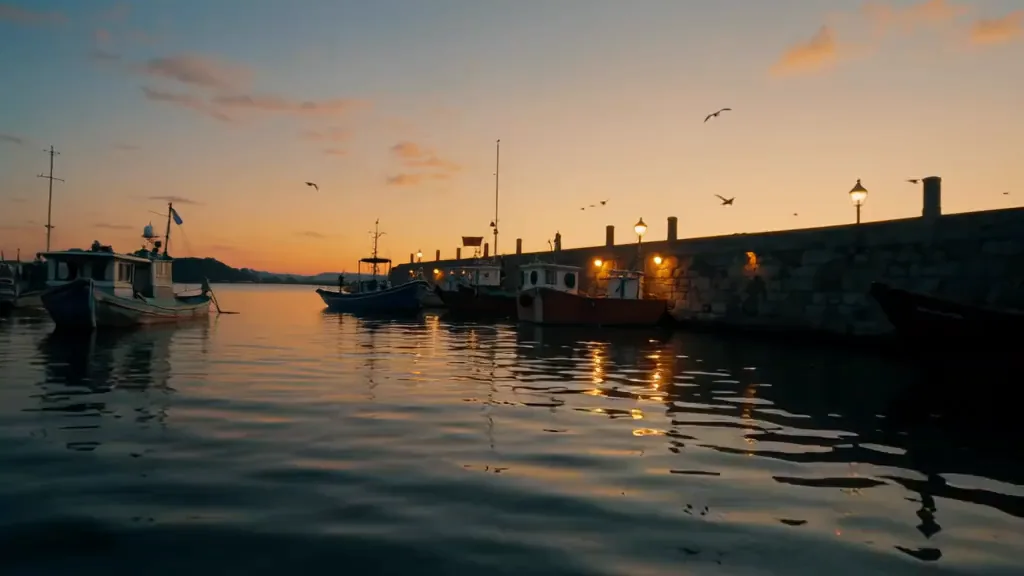
A paper boat drifting down a rain-filled street gutter at golden hour, in slow motion.
2 s clip · 1280×704 · Wan 2.2 TI2V 5B Turbo · M5 Pro 24 GB · 7.8 min
Prompt
a paper boat drifting down a rain-filled street gutter at golden hour, ripples and warm reflections, cinematic slow motion
The dripper photo, edited in place: a small potted succulent added beside it.
Z-Image Turbo · M5 Pro 24 GB · 72 s
Prompt
studio product photo of a ceramic pour-over coffee dripper on a glass carafe, on a walnut counter, a small potted succulent beside it, soft morning window light, shallow depth of field
Transcript
Welcome back. Today we're looking at three small ways to make your morning coffee better, starting with the water: fresh, filtered, and just off the boil.
A short coffee-tips narration in an English voice, Ryan.
Qwen3-TTS · M5 Pro 24 GB · 10 s
Prompt
Welcome back. Today we're looking at three small ways to make your morning coffee better, starting with the water: fresh, filtered, and just off the boil.
Transcript
City lights are calling me home Neon rivers under my feet We are running, running into the light Hold on, hold on, we own the night
Catchy synth-pop, 118 BPM, female vocal, analog synths and a hooky chorus.
MiniMax-Music3 · M5 Pro 24 GB · 3.2 min
Prompt
Catchy synth-pop, 118 BPM, A major. Bright, polished production: soft analog synth pads, a bouncy synth bass, crisp electronic drums and a sparkling arpeggio. Upbeat, warm, nostalgic, made for a city night. Clear female lead vocal, youthful and open, melodic and articulate, with light reverb that adds space without blurring the words. No heavy vibrato, belting or harsh processing. Start with the arpeggio and a four-on-the-floor beat, bring the vocal in on the verse, lift into a hooky chorus, and end on a clean final beat. Keywords: synth-pop, female vocal, analog synths, bouncy bass, electronic drums, arpeggio, upbeat, catchy hook, nostalgic, 118 BPM, A major.
List every ingredient you can see on this counter, one per line.
Tomatoes Basil Spaghetti Parmesan cheese Garlic clove
Qwen3-VL 8B · M5 Pro 24 GB · 4 s
One model, two Macs
Qwen3.6 35B-A3B, a 35-billion-parameter mixture-of-experts model neither Mac can run alone, answering at 9.3 tokens/s — faster than you read.
- M5 Pro, 24 GB of memory, holds 11.5 GB of the model: layers 0 to 19 of 40, and runs the orchestrator.
- M4 Pro, 24 GB of memory, holds 9.9 GB of the model: layers 20 to 39 of 40.
- M5 Pro and M4 Pro are linked over LAN Wi-Fi.
- Together they run the model at 9.3 tokens/s.
21 GB model24 GB each9.3 tokens/s
A 24 GB Mac can give one model about 19 GB, so each holds half of its layers.
Built for operators who
self-host for privacy
Fully Private
No token ever leaves your network. All inference runs on hardware you control, with encrypted inter-node communication.
Distributed Layers
Split any transformer model across heterogeneous devices — Apple Silicon Macs, GPUs, CPUs — using the Inclavate sharding protocol.
Near-native Speed
Optimized layer routing and LAN-first path selection deliver 30–50 tok/s across a typical 3-node home cluster.
Speech, Music, Images & Video
Narration, cloned voices, songs, pictures and clips, made on the same machines through one job API. Image and video jobs run on whichever node holds the model, several machines at once.
Any Hardware
Run on Apple Silicon, NVIDIA, AMD, or CPU-only nodes. Automatic layer assignment based on available VRAM and RAM.
No Vendor Lock-In
Self-host the entire stack on hardware you own. An OpenAI-compatible API and documented protocol keep your existing tools working — no cloud, no lock-in.
- Llamatext
- Qwentext
- DeepSeektext
- Gemmatext
- Mistraltext
- gpt-osstext
- Phitext
- GLMtext
- FLUXimage
- Stable Diffusionimage
- Qwen-Imageimage
- Z-Imageimage
- Wan 2.2video
- LTXvideo
- HunyuanVideovideo
- Qwen3-TTSspeech
- MiniMax-Music3music
- All models in the catalog
- Reasoning effort
- Voice chat
- Speech to text
- Image input
- Audio input
- Video frames
- Document OCR
- Image generation
- Image editing
- Inpainting
- Upscaling
- OpenAI images API
- Video generation
- Image to video
- Video restyle
- Longer videos
- Keyframes
- Soundtracks
- Talking portraits
- Speech generation
- Voice cloning
- 11 Indian languages
- Music generation
Own your inference,
end to end
From zero to distributed inference
in three steps
Deploy a node
Install the Inclavate CLI on any machine. Specify how many transformer layers it should handle based on available memory.
dppan node --layers 0-8 --model llama3.2:1bJoin a cluster
Nodes discover each other via mDNS on LAN or libp2p on the internet. The orchestrator coordinates layer chains automatically.
dppan join --cluster local-001 --token <TOKEN>Start inferring
Send prompts via REST or the Chat UI. Your input is sharded through nodes in sequence — no cloud, no data exposure.
curl localhost:8000/v1/chat -d '{"prompt":"..."}'Running in 60 seconds
Drop-in replacement for any OpenAI client
Inclavate exposes a fully OpenAI-compatible REST API. Swap your base URL — your existing code, libraries, and SDKs work unchanged. Point LangChain, llama-index, or your own app at your local cluster. Speech, music, images and video have a job API on the same server.
curl http://localhost:8000/v1/chat/completions \
  -H "Content-Type: application/json" \
  -d '{
    "model": "llama3.2:1b",
    "messages": [{"role": "user", "content": "Hello!"}],
    "stream": true
}'Your data never leaves
your network
Inclavate is local-first and zero-trust. Run fully self-hosted, or use the managed instance — the Hosted/Local badge in your dashboard always shows exactly where inference is happening.
Private by design
Every token is processed on hardware you control, and inter-node traffic is encrypted. Nothing is sent to a third party — ever.
No telemetry
Inclavate doesn't phone home. No usage tracking, no prompt collection, no analytics baked into the binary.
You hold the keys
Join tokens, PeerID allowlists, and cluster isolation mean only your devices join your network. Zero-trust by default.
Deploy Inclavate inside your org
Private cluster deployments with join token auth, PeerID allowlists, full audit logs, JSONL export, and cluster federation. Your own Inclavate Dashboard — on your infrastructure.
Get in touch
Enterprise deployments, security disclosures, or just questions — we read every message.